Mojtaba Khamenei, son of Iran's eliminated supreme leader who also lost his wife, son and mother in the strike, is seen as a leading successor with backing...
Ynetnews
Saturday, March 7, 2026 6:13:04 AM
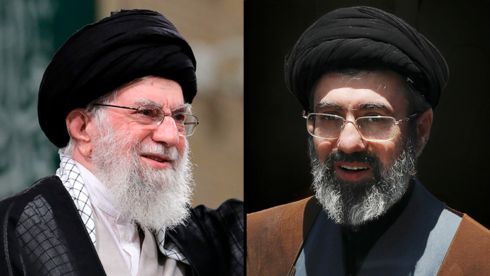
Marked as Iran’s next leader, now missing: The secretive son of Ali Khamenei
His father, mother, wife and son were all killed in the opening strike of Operation Roaring Lion a week ago. Yet three days after reports that he is expected to be chosen by the Assembly of Experts — an 88-member clerical body that under Iran’s constitution appoints a supreme leader when the position becomes vacant — as his father’s successor as Iran’s supreme leader, Mojtaba Khamenei has still not appeared in public or even issued a statement. Nor has Iran’s ayatollah-led regime made any formal announcement.
All of this comes against the clear possibility that the IDF will attempt to eliminate him as well, along with statements by President Donald Trump that the selection of Khamenei’s son — which would be seen as continuing his father’s hardline path — would be unacceptable to him.
For now, Mojtaba Khamenei’s fate remains unclear. According to reports, however, he survived last Saturday’s attack in which his father, Iran’s supreme leader Ali Khamenei, was killed at his office compound in Tehran. Also killed in the strike, according to the reports, were Mojtaba’s wife, Zahra Adel, as well as his son and mother.
The compound was attacked again today by a large Israeli Air Force formation of 50 fighter jets, this time to destroy the massive underground bunker beneath it. The strike this morning came after Israel received intelligence indicating that at least one individual — a very senior figure in the Iranian regime — was inside the bunker at the time.
Mojtaba, 56, is considered part of the same ultraconservative camp as his father. Among other positions, he has supported suppressing regime opponents inside Iran and pursuing a hawkish, confrontational policy toward external enemies.
He is a midranking cleric who teaches Shiite theology at a seminary in the city of Qom, the center of Iran’s religious life. Although he has never held an official position in the regime, he is widely seen as wielding significant influence and has cultivated close ties with the Islamic Revolutionary Guard Corps, Iran’s powerful military and political force.
Analysts outside Iran have previously described him as something of a gatekeeper in his father’s inner circle. In 2019, the United States imposed sanctions on him. At the time, Washington said that although he held no official role, he still “represents” the supreme leader and assists him in destabilizing the region.
On Tuesday, it was reported that Israeli officials believe Khamenei’s son is expected to be selected as his father’s successor by the Assembly of Experts. Israel bombed a building belonging to the body in the city of Qom the same day, but Iran said it was empty and that the council’s deliberations were being conducted virtually.
In any case, although Iran International — an opposition television channel broadcasting from abroad — claimed that evening that Mojtaba had in fact been chosen, and the New York Times shortly afterward reported that he was the leading candidate, there has been no sign since that a formal decision has been made, or at least publicly announced. The Times reported at the time that members of the Assembly of Experts feared that such an announcement would make Khamenei’s son a prominent target for elimination by the Israeli Air Force.
Selecting him would likely be seen as a defiant message to the United States and the West — a continuation of the hardline path of his father, who ruled Iran with an iron hand for 36 years. Analysts say such a move would also signal the firm grip on power held by the Islamic Revolutionary Guard Corps. “Mojtaba enjoys strong support from the Revolutionary Guards, particularly among the younger and more hardline generation,” Kasra Aarabi, a researcher specializing in the Revolutionary Guards at the Washington-based group United Against Nuclear Iran, told Reuters.
“So if Mojtaba is alive, there is a strong chance he will succeed his father,” she added, describing him as someone who even before his father’s assassination effectively functioned as a kind of “mini–supreme leader” because of his influence and ties with the Guards.
As noted, Mojtaba has never held an official role in the Iranian regime. And although his name has often been mentioned as a potential successor to his father, until recently he was not seen as the leading candidate — largely because his appointment would be perceived as transferring power from father to son, reminiscent of the monarchy that Iran overthrew in the 1979 Islamic Revolution.
Mojtaba also holds the religious title Hojjat al-Islam — one rank below the senior clerical title of ayatollah — and therefore lacks, in the view of many, the high religious authority expected of a supreme leader. However, that does not appear to be a strict requirement. His father, Ali Khamenei, who succeeded Ayatollah Ruhollah Khomeini — the leader of the Islamic Revolution — in 1989, also did not hold the highest clerical title required under the constitution at the time and the constitution was amended to allow his appointment.
Although Mojtaba was not previously seen as the most prominent candidate, his father’s assassination and his father’s elevation to martyr status among Iran’s ultraconservative camp — as well as the deaths of his wife and son — may have strengthened his standing within that camp. The New York Times also reported, citing several Iranian sources, that the Revolutionary Guards had pressed for Mojtaba to be chosen as successor.
If selected, Khamenei’s son would instantly become the most powerful figure in the regime. Under Iran’s constitution, the supreme leader is a Shiite cleric who is not merely a “spiritual” authority but holds the final say over all matters of government — from the military and security establishment to foreign and domestic policy. He is the commander in chief of Iran’s armed forces, and the Revolutionary Guards answer directly to him. The position was created by Khomeini based on his radical doctrine that Shiite clerics — the ayatollahs — should rule until the arrival of the Mahdi, a messianic figure in Islamic belief.
Mojtaba was born in 1969 in the city of Mashhad, about a decade before the Islamic Revolution. He is the second of six children of Ali Khamenei, who at the time was a close ally of Khomeini and helped organize protests against the shah. In his father’s biography, Khamenei recounts the moment when the shah’s secret police, SAVAK, raided the family home and beat him. He described how, when Mojtaba and his siblings awoke, the agents told them their father was “going on vacation.” Khamenei wrote: “I told them, ‘There is no need to lie.’ I told them the truth.”
After the fall of the shah in 1979, the Khamenei family moved to the capital, Tehran, where Mojtaba attended the Alavi High School alongside the sons of other senior figures in the newly established Islamic Republic. After finishing high school, Mojtaba joined the Revolutionary Guards in 1987 and fought in the final stages of the Iran-Iraq War, which ended in 1988. He served in the Habib ibn Mazahir Battalion, a unit that later produced several senior figures in the Guards.
Since his father became supreme leader in 1989, Mojtaba has continued to cultivate ties with the Revolutionary Guards, while benefiting from access opened to him and his family to a multibillion-dollar network of business assets spread across foundations throughout Iran. These foundations are funded by state industries and by wealth that once belonged to the shah. Like his father, Mojtaba studied in the religious seminaries of Qom and now teaches there himself, a role that has also allowed him to build ties with Iran’s clerical establishment.
Mojtaba married Zahra Adel, the daughter of a prominent conservative Iranian politician, further strengthening his connections to the conservative establishment of the ayatollah regime. Despite his considerable influence, Khamenei’s son has largely operated behind the scenes and never held an official government position. He worked in his father’s offices in central Tehran, and in the late 2000s, during the release of WikiLeaks documents, U.S. diplomatic cables described him as a “power behind the cloak.” One cable even included a claim that he had tapped his father’s phone and was cultivating a power base of his own within the regime.
Khamenei’s son, according to a 2008 cable, “is perceived within regime circles as a determined and capable leader and manager who may one day become at least part of the national leadership; his father may also view him in this light.”
The cable noted his young age and lack of senior religious authority but added that “due to his abilities, wealth and powerful alliances, Mojtaba is reportedly seen by several figures within the regime as a plausible candidate for a joint leadership in Iran upon his father’s death, whether that occurs soon or many years from now.”
Mojtaba has rarely made headlines in the Iranian media. Among the few instances were accusations from figures in the reformist camp — politicians who support the principles of the Islamic Revolution but favor greater cooperation with the West and a moderation of domestic social repression — that he intervened in the 2005 presidential election. They alleged that he worked with religious leaders and the Revolutionary Guards to help secure the victory of Mahmoud Ahmadinejad, who at the time was a relatively little-known candidate.
Mehdi Karroubi, a reformist politician and one of Ahmadinejad’s rivals in that election, described Mojtaba as “the leader’s son” interfering in the vote. The supreme leader himself defended his son, saying at the time: “He is a leader, not the son of a leader.”
Original Source:
Ynetnews
Visit Link