The United States and Israel launched joint military strikes against Iran on 28 February 2026, marking the start of what has effectively become a U.S.-Iran...
Quwa
Saturday, March 7, 2026 6:18:22 AM
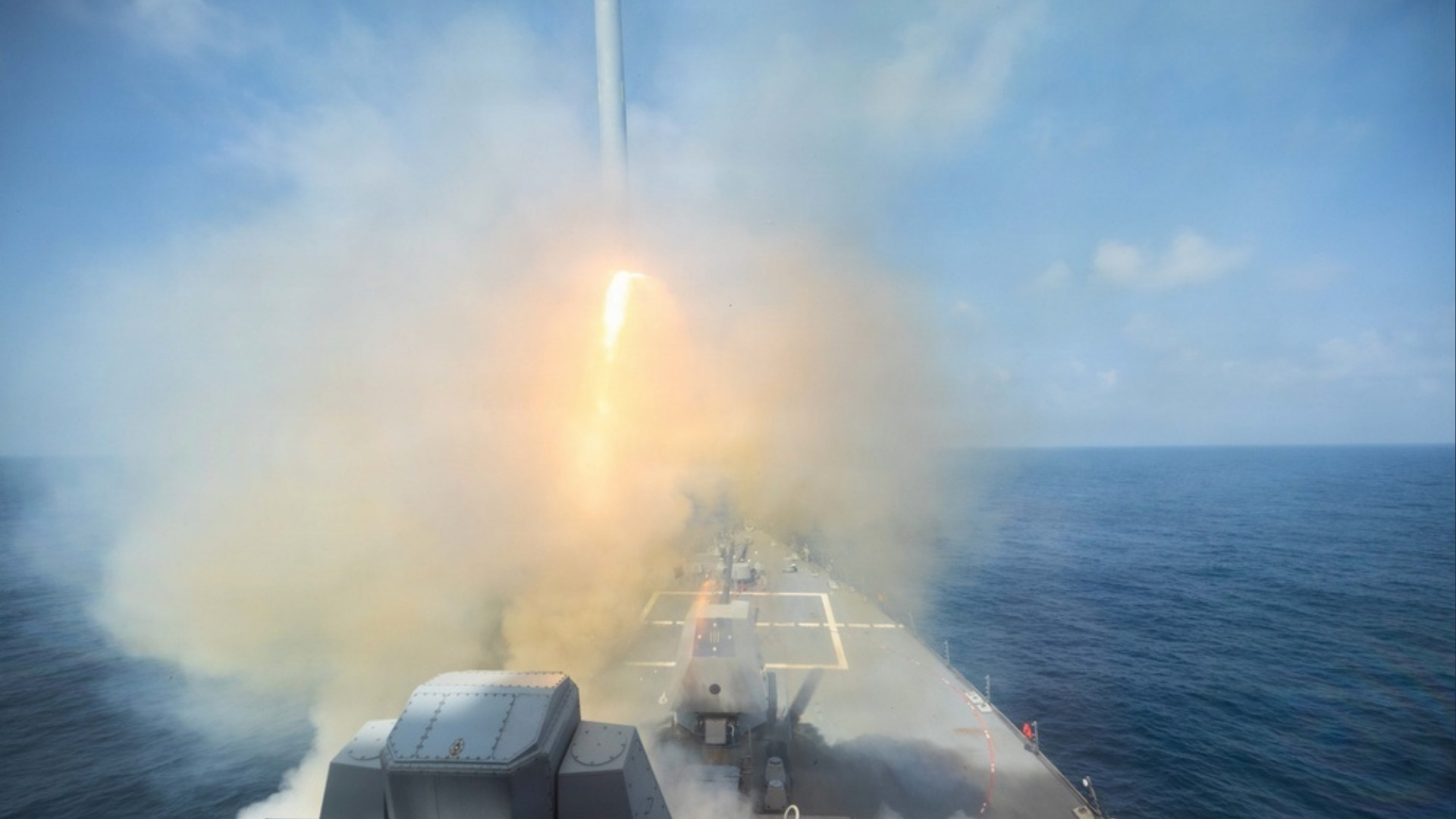
U.S.-Israel Strikes on Iran Enter Second Week as Regional Spillover Risks Mount
The United States and Israel launched joint military strikes against Iran on 28 February 2026, marking the start of what has effectively become a U.S.-Iran war – the first direct, sustained military conflict between the two countries.
Unlike the limited U.S. strikes on Iranian nuclear facilities in 2025, the current campaign is broad in scope, with U.S. forces targeting Iran’s ballistic missile program, naval assets, air defence systems and what Washington has described as terrorism-related infrastructure.
U.S. Secretary of State Marco Rubio confirmed that the U.S. joined operations that Israel had already initiated, with President Trump characterizing the strikes as a pre-emptive measure against threats to U.S. national security.
Israel claims to have destroyed approximately 80% of Iran’s air defence systems – which include Russian-supplied S-300PMU-2 batteries, the domestically developed Bavar-373 and Khordad-15 systems – and 60% of its missile launchers during the first phase of operations.
Israeli forces have since shifted focus toward underground ballistic missile facilities, including sites associated with Iran’s Shahab, Emad and Sejjil medium- and intermediate-range ballistic missiles, according to Israeli military sources.
Iranian Retaliation and Reported Casualties
Iran’s Islamic Revolutionary Guard Corps (IRGC) – the parallel military force responsible for Iran’s ballistic missile program, naval asymmetric operations and coordination with regional non-state actors – has claimed retaliatory strikes against 20 U.S.-linked targets. These include facilities in Kuwait, Bahrain and the United Arab Emirates (UAE), as well as a U.S. oil tanker operating in the Persian Gulf.
The IRGC also claimed strikes against Israel.
Reports from Iranian sources – which have not been independently verified – allege that U.S.-Israeli strikes have struck 174 cities, resulting in over 1,230 deaths, including at sites described as schools and hospitals. Neither the U.S. nor Israel has confirmed these claims, and independent verification has not been possible at the time of writing.
Iran has also been accused of striking targets in Azerbaijan and Türkiye, though Tehran has denied responsibility for both. Notably, NATO confirmed the interception of an Iranian ballistic missile over Turkish airspace – an event that, if attributed definitively to Iran, would carry significant implications under NATO’s collective defence framework.
Regional Spillover and Kurdish Mobilization
The conflict has already begun to generate spillover effects. Kurdish Peshmerga forces have reportedly mobilized along the Iraq-Iran border following Iranian strikes on Iraqi Kurdistan, raising the prospect of a broader destabilization of the Iraq-Iran frontier.
Gulf states have, according to reports, urged the U.S. and Israel to continue their campaign against Iran. U.S. officials have stated that sufficient munitions are available to sustain a prolonged operation.
Notes & Comments
The U.S. justification for the strikes has drawn scrutiny. Initial statements pointed to an Israeli-led operation that the U.S. subsequently joined, but President Trump later characterized his decision as being based on a “good feeling” that an Iranian attack was imminent.
Former U.S. officials have noted the inconsistency between these two framings, raising questions about the legal and strategic rationale underpinning the campaign.
The stated U.S. war aims – destroying Iran’s missile program, neutralizing its naval capacity and dismantling its support infrastructure for non-state actors – are broad in scope but difficult to verify independently.
If the claimed destruction of 80% of Iran’s air defences and 60% of its missile launchers is accurate, it would represent a severe degradation of Iran’s military capabilities. However, Iran’s dispersal strategy and hardened underground facilities likely mean that residual offensive capacity remains intact.
It is too early to assess whether these objectives are being met or how Washington intends to define an end-state for operations.
For regional defence planners, the conflict raises several immediate concerns. First, the reported Iranian strikes on Gulf state territory – even if limited in scope – will likely accelerate existing air and missile defence procurement efforts across the Gulf Cooperation Council (GCC).
The demonstrated willingness of Iran to target U.S.-linked facilities in Kuwait, Bahrain and the UAE validates years of investment in integrated air defence systems (IADS) and could push GCC states toward accelerated timelines for advanced anti-ballistic missile (ABM) acquisitions.
Second, the NATO interception of a ballistic missile over Türkiye introduces a European dimension to a conflict that has, thus far, been framed as a Middle Eastern theatre.
One can see this event becoming a catalyst for Ankara to further invest in its indigenous air and missile defence capabilities, including the SIPER long-range system and the HISAR family of medium-range interceptors.
Third, the Kurdish Peshmerga mobilization along the Iraq-Iran border highlights the fragility of Iraq’s position as a buffer zone. Given that both Iran and the U.S. maintain significant equities in Iraq, the conflict could force Baghdad into an impossible balancing act – one that could, in turn, reshape the regional defence order in ways not yet fully visible.
The trajectory of this conflict will depend heavily on Iran’s ability to sustain retaliatory operations and on the U.S.’s willingness to commit to an open-ended campaign with unclear political objectives.
For Pakistan, Türkiye and the GCC states, the operational lessons emerging from this conflict – in terms of missile defence, the survivability of dispersed underground assets and the role of non-state proxies – could shape defence planning for the next decade.
Original Source:
Quwa
Visit Link